
When Emotions Go From 0 to 100
Some emotions arrive quietly. Others feel like they take over the whole room.
Emotional regulation work helps teens and adults understand what is happening when anger, anxiety, sadness, embarrassment, or frustration becomes intense—and develop more choices about what happens next.
The goal is not to become calm all the time or suppress emotions. Emotions provide information and are part of being human.
Regulation means becoming better able to notice an emotion, understand it, tolerate it, communicate it, and choose a response instead of automatically reacting.
Regulation Doesn't Mean Never Getting Upset
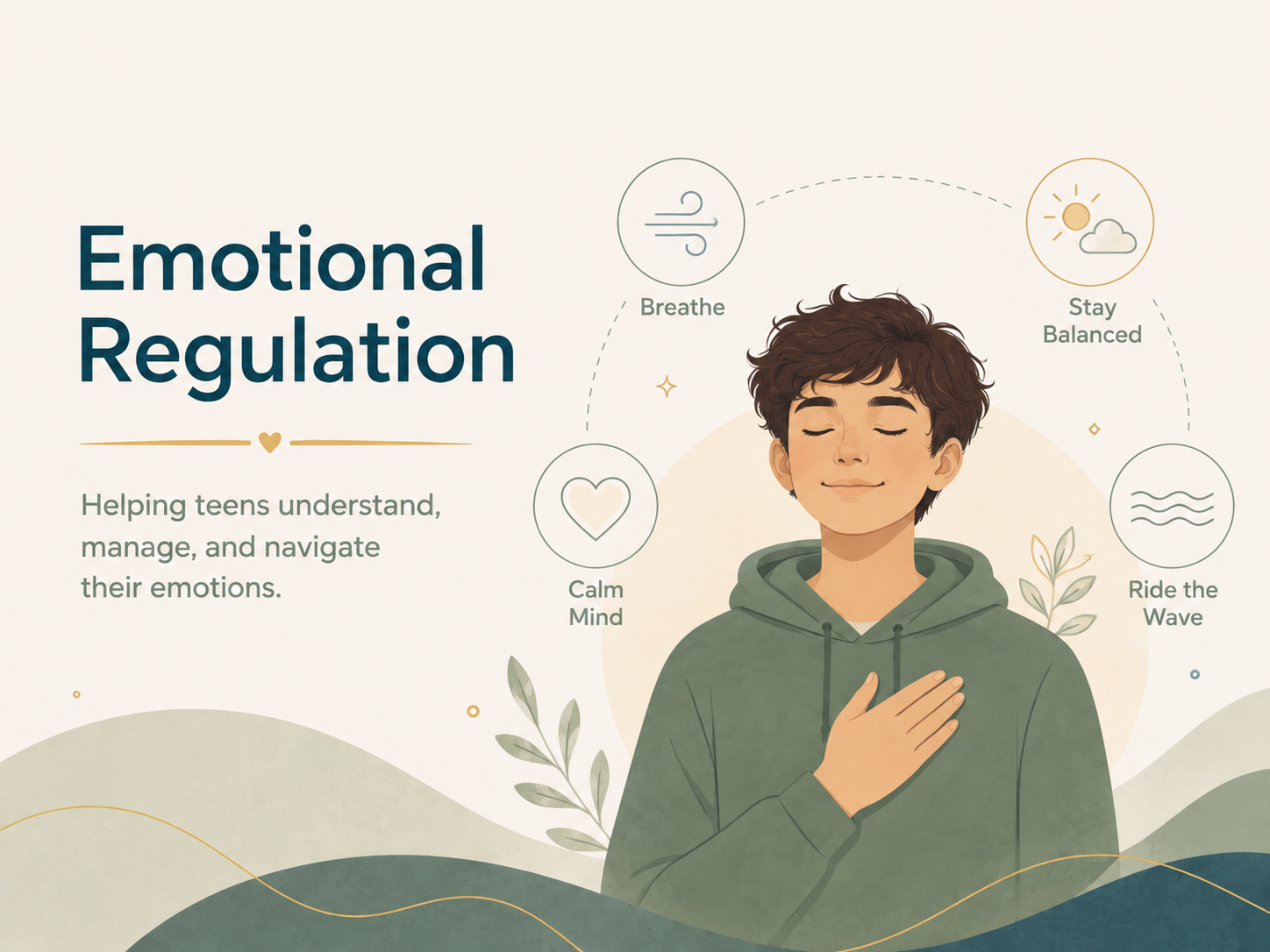
What We Practice
Recognizing emotions and body signals earlier.
Identifying triggers and patterns.
Understanding the difference between an emotion and an action.
Pausing before responding.
Tolerating uncomfortable feelings.
Communicating needs more clearly.
Recovering after a strong emotional reaction.
Repairing relationships when a reaction did not go the way you wanted.
Unified Protocol: A Simple Explanation
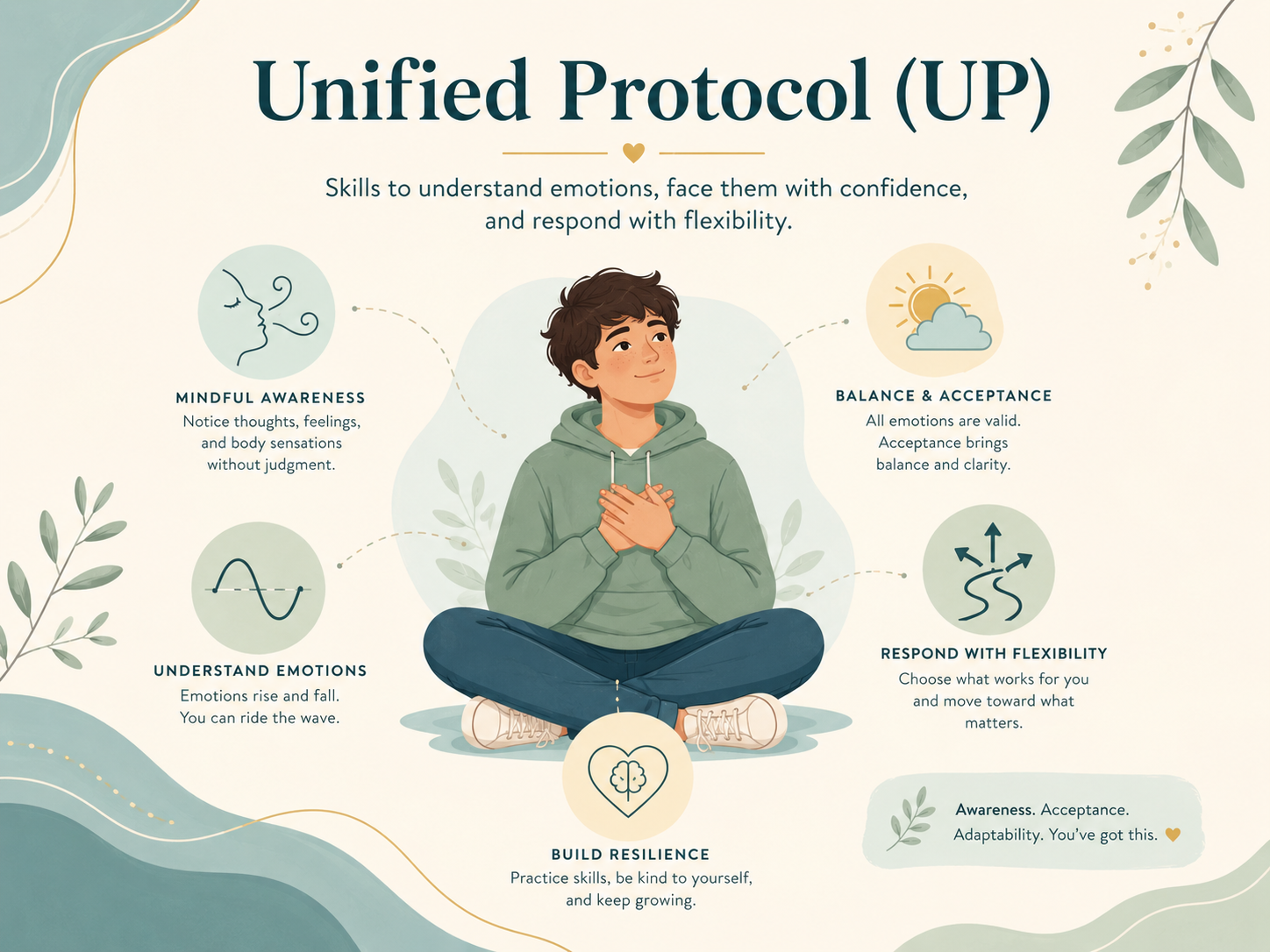
The Unified Protocol is especially useful here. It helps us learn what emotions are doing, what thoughts and physical sensations show up with them, and what behaviors we use to escape or control them.
We then practice responding differently so an uncomfortable emotion can be present without automatically running the whole situation.
For Parents
A teen having a strong emotion does not automatically mean the emotion needs to be stopped. Sometimes they need help learning how to experience it safely while still following appropriate boundaries.
Connection and boundaries can work together: “I understand you're angry” and “You still cannot speak to me that way” can both be true.


Ready for the Next Step?
Not sure whether therapy is the right next step? Let's start with a conversation.
Virtual therapy available throughout Texas. Online consultation booking is the easiest way to get started; phone and email are also available.