
When Your Brain Won't Stop Asking “What If?”
Anxiety can make ordinary situations feel like they require constant preparation. You may replay conversations, expect the worst, avoid situations, ask for reassurance, or feel physical symptoms before anything has even happened.
Wayfinder provides online anxiety therapy throughout Texas for teens, young adults, and adults who want to understand anxiety and build confidence responding to it.
Anxiety is not always obvious fear. In teens it may look like irritability, procrastination, school avoidance, stomachaches, shutting down, perfectionism, or repeatedly asking whether something will be okay.
In adults it may look like overplanning, difficulty making decisions, trouble relaxing, avoiding conflict, or constantly preparing for problems that have not happened.
Anxiety Can Look Different Than You Expect

The Anxiety-Avoidance Loop
Avoidance often works in the short term. If school makes you anxious and you stay home, anxiety may drop. If social situations feel uncomfortable and you cancel, you may feel immediate relief.
The problem is that the brain can learn, “I escaped, so that situation must really be dangerous.” Tomorrow can become even harder. Therapy helps us interrupt that loop gradually rather than demanding that you simply stop being anxious.
How the Unified Protocol Helps
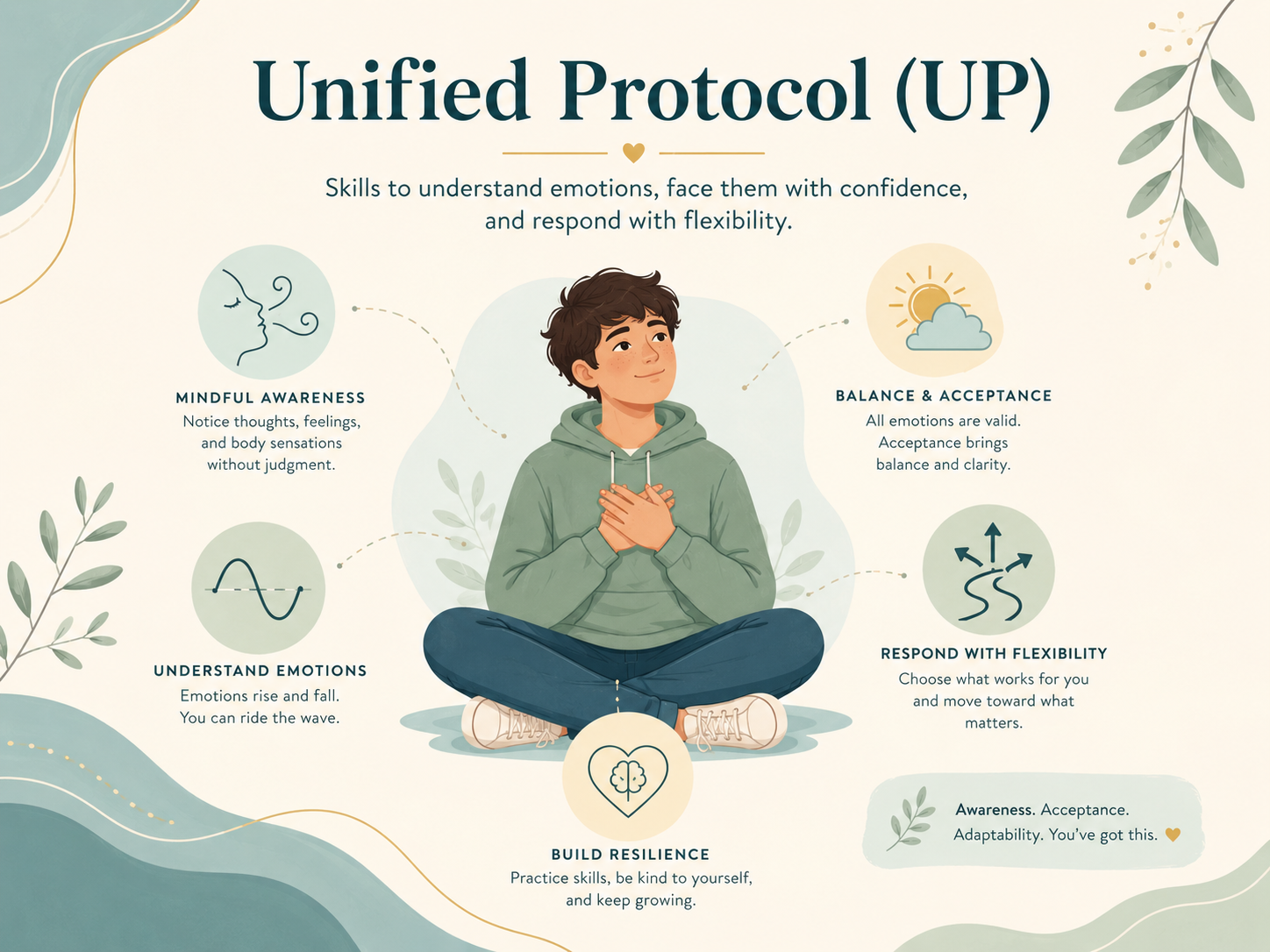
The Unified Protocol helps people understand emotions, notice thoughts and body sensations, identify avoidance patterns, and practice staying with uncomfortable feelings long enough to learn that they can handle them.
Teen-friendly version: We figure out what your emotions are doing, what you usually do when they show up, and whether those reactions are helping. Then we practice different ways of responding instead of letting anxiety make every decision.
How CBT Helps
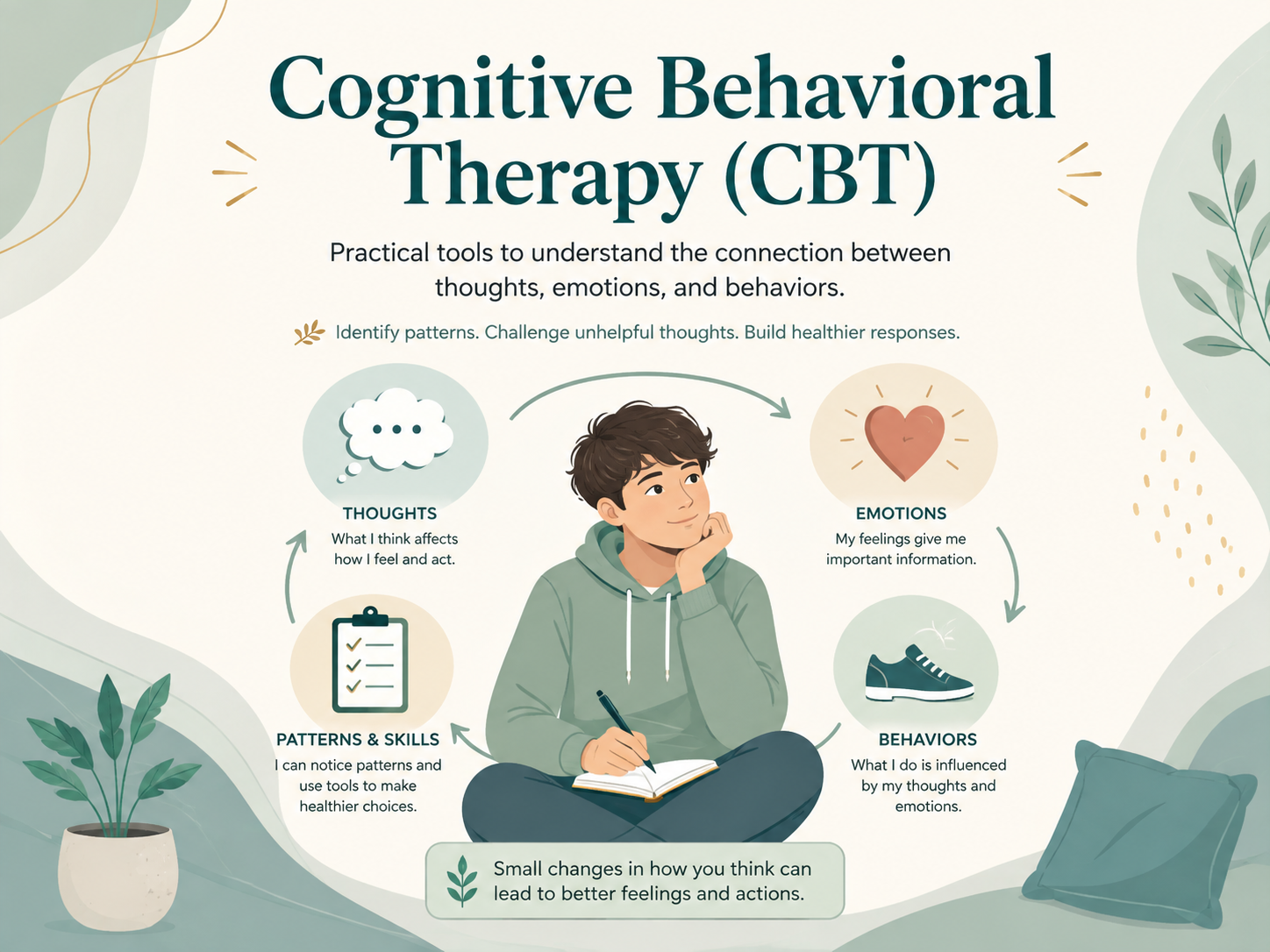
CBT helps us look at the connection between thoughts, feelings, and actions. If the thought is “Everyone will think I'm stupid,” anxiety may rise and avoidance may follow.
We learn to notice the pattern, evaluate the thought, and practice a response that moves you toward what matters rather than automatically away from discomfort.
What Progress Can Look Like
Progress is not necessarily never feeling anxious again. It can mean understanding anxiety sooner, avoiding less, needing less reassurance, recovering more quickly, tolerating uncertainty, and doing important things even while some anxiety is present.


Ready for the Next Step?
Not sure whether therapy is the right next step? Let's start with a conversation.
Virtual therapy available throughout Texas. Online consultation booking is the easiest way to get started; phone and email are also available.
Wondering how online sessions actually work, or what they cost? See Online Therapy in Texas.