
How to Help Teens With Anxiety: A Parent's Guide
Learn how to help teens with anxiety using proven coping strategies, communication tips, and guidance on when to seek professional support. Discover more.

Signs of Anxiety in Teenagers: What to Watch For
Recognizing the signs of anxiety in teenagers is the first critical step for parents seeking to provide support. Anxiety in adolescents often manifests differently than in younger children or adults, making it challenging to identify. It's not just about occasional worry; it's a persistent state that can significantly impact a teen's daily life, from school performance to social interactions and overall well-being. Understanding these nuanced indicators is key to knowing how to help teens with anxiety effectively.
Physical Symptoms Parents Often Miss
Many parents overlook the physical manifestations of teen anxiety, often attributing them to typical adolescent growth or other minor ailments. However, anxiety frequently presents with bodily cues that can be quite telling. Teens might complain of unexplained headaches, stomachaches, or general fatigue, especially during stressful periods. They may also experience muscle tension, restlessness, or difficulty sleeping, even when tired. These physical symptoms are not imaginary; they are the body's physiological response to prolonged stress and worry. For example, persistent stomach issues without a clear medical cause can often be linked to underlying anxiety. What most guides miss is that these symptoms are often dismissed, leading to delayed intervention.
Watch OutA common mistake is dismissing a teen's persistent physical complaints as "just trying to get out of school" or hypochondria. Ignoring these real bodily signals can prolong their distress and prevent timely support for their anxiety.
Behavioral and Emotional Red Flags
Beyond physical symptoms, anxiety in teenagers often expresses itself through noticeable shifts in behavior and emotional regulation. Parents might observe increased irritability, sudden outbursts, or a tendency to withdraw from activities they once enjoyed. A teen might become overly sensitive to criticism, struggle with concentration, or exhibit excessive perfectionism. Socially, they may start avoiding friends, declining invitations, or showing heightened self-consciousness. Academically, a decline in grades, procrastination, or an unwillingness to attend school can also signal underlying anxiety. Emotionally, many teens with anxiety struggle with persistent feelings of dread, panic, or overwhelm, which they may not know how to articulate. They might also engage in repetitive behaviors or seek constant reassurance.
How to Talk to Your Teen About Mental Health
Initiating conversations about mental health can feel daunting for both parents and teenagers, yet it is a cornerstone of learning how to help teens with anxiety. The goal isn't to "fix" them immediately but to create a safe space where they feel heard and understood without judgment. This requires patience, empathy, and a willingness to listen more than you speak. For many teens, simply knowing they have an ally in their parent can be a significant source of comfort and

Step-by-step visual guide for parent and teenager and sitting concepts for how to help teens with anxiety
Active Listening Scripts That Actually Work
Truly hearing your teen means practicing active listening, a skill that goes beyond just waiting for your turn to talk. It involves giving them your full attention, reflecting on what you hear, and validating their feelings. A common mistake is jumping straight to solutions or minimizing their feelings. Instead, try these scripts:
To open the conversation: "I've noticed you seem a bit [quiet/stressed/different] lately. I'm here if you ever want to talk about anything, no pressure."
To encourage sharing: "It sounds like you're going through a lot right now. Can you tell me more about what's on your mind?"
To validate their feelings: "That sounds incredibly frustrating/scary/overwhelming. It makes sense that you feel that way."
To reflect without judgment: "So, if I'm understanding correctly, you're feeling [emotion] because [situation]?"
To show support: "I'm sorry you're dealing with this. We'll figure it out together."
What to Say (and What to Avoid)
When your teen opens up, your response matters immensely. Focus on empathy and support. What most guides miss is the subtle power of your tone and non-verbal cues. Maintain open body language, make eye contact, and avoid distractions.
What to Say:
"I love you, and I'm here for you no matter what."
"Your feelings are valid, and it's okay to feel them."
"We can explore options together to help you feel better."
"It takes a lot of courage to talk about this, and I appreciate you trusting me."
What to Avoid:
"You're overreacting." or "It's not a big deal." (Dismisses their feelings)
"Just stop worrying so much." (Invalidates their experience)
"You need to get over it." (Implies their anxiety is a choice)
"Why can't you be more like [sibling/friend]?" (Creates comparison and shame)
"This is your fault." (Blames them for their struggles)
Pro TipIn practice, this means creating a consistent "check-in" time, even if it's just a few minutes during a car ride or dinner. Regular, low-pressure opportunities for conversation can make it easier for teens to share when they need to.
Teen Anxiety Coping Strategies You Can Practice Together
Helping teens develop effective teen anxiety coping strategies is a continuous process that often works best when parents participate. These strategies aren't quick fixes but rather tools that, with consistent practice, can help manage anxious feelings and build resilience. The real difference between an approach that works and one that doesn't often comes down to integrating these techniques into daily life.

Mindfulness and Relaxation Techniques
Mindfulness and relaxation techniques teach teens to be present and aware, reducing the grip of anxious thoughts. These are skills that improve with practice.
Deep Breathing Exercises: Simple techniques like 4-7-8 breathing (inhale for 4, hold for 7, exhale for 8) can quickly calm the nervous system (peer-reviewed research). Practice together for a few minutes each day.
Guided Meditation: Many free apps and online resources offer short guided meditations specifically for teens. Try a 5-10 minute session before bed or during a stressful moment.
Progressive Muscle Relaxation: This involves tensing and then relaxing different muscle groups throughout the body. It helps teens recognize and release physical tension associated with anxiety.
Grounding Techniques: When overwhelmed, grounding helps bring focus back to the present. Ask your teen to name 5 things they can see, 4 things they can feel, 3 things they can hear, 2 things they can smell, and 1 thing they can taste.
Technique
How It Helps
Best Practice
Deep Breathing
Calms the nervous system, reduces heart rate
Daily 5-minute sessions, during stressful moments
Guided Meditation
Enhances presence, reduces intrusive thoughts
Before bed, during quiet time
Progressive Muscle Relaxation
Releases physical tension, increases body awareness
When feeling tense, before sleep
Grounding Techniques
Redirects focus from anxious thoughts to present
During panic or overwhelming moments
Physical Activity, Sleep Hygiene, and Nutrition
A holistic approach to managing anxiety includes attention to physical well-being. These aspects are often overlooked but play a significant role in emotional regulation.
Physical Activity: Regular exercise is a powerful stress reliever. Encourage activities your teen enjoys, whether it's team sports, hiking, dancing, or simply walking the dog. The goal is consistent movement, not intense training. Physical activity releases endorphins, which have mood-boosting effects (the NIH).
Sleep Hygiene: Lack of sleep exacerbates anxiety. Establish a consistent sleep schedule, ensure their bedroom is dark and cool, and limit screen time before bed. Avoid caffeine intake, especially in the afternoon and evening.
Nutrition: A balanced diet supports overall mental health. Encourage nutrient-rich foods and limit processed snacks, excessive sugar, and highly caffeinated beverages. A stable blood sugar level can help prevent mood swings and irritability.
Key TakeawayConsistent engagement in these strategies, especially when practiced with a parent, reinforces their effectiveness and helps teens build a strong toolkit for managing anxiety.
Digital Wellness and Social Media Boundaries
The digital world presents unique challenges for adolescent mental health, making digital wellness and social media boundaries crucial for parents learning how to help teens with anxiety. Constant connection, the pressure of online comparison, and exposure to cyberbullying can significantly fuel anxiety.
It's not about banning technology entirely, but about fostering a healthy relationship with it. Start by having open conversations about their online experiences, what they see, and how it makes them feel. Encourage them to critically evaluate content and understand that what they see online is often a curated highlight reel, not reality.
Establishing clear boundaries for screen time, especially around bedtime, is essential for improving sleep hygiene. Consider a "digital curfew" where all devices are put away an hour before sleep. Work with your teen to create a family media plan that includes designated screen-free times and zones, like during meals or family outings. Teach them about privacy settings and the importance of being mindful of what they share online. Encourage them to unfollow accounts that make them feel inadequate or anxious. This proactive approach helps teens build resilience against online stressors and promotes better emotional regulation.
Parental Self-Regulation and Sibling Dynamics
Parental self-regulation is an often-underestimated factor in supporting an anxious teen. Children, especially adolescents, are highly attuned to their parents' emotional states. If a parent is constantly stressed, anxious, or overwhelmed, it can inadvertently heighten a teen's own anxiety. Therefore, parents learning how to help teens with anxiety must also prioritize their own mental well-being. This doesn't mean hiding your emotions, but rather modeling healthy coping mechanisms.
Practice your own stress management techniques, whether it's mindfulness, exercise, or seeking support for yourself. Showing your teen that you also prioritize your mental health can be a powerful example. This is where Wayfinder Counseling Therapy can help parents in Texas, offering guidance to improve communication and emotional regulation within families. Our approach focuses on understanding the individual before the problem, fostering a human-centered environment where both parents and teens can gain clarity.
Regarding sibling dynamics, an anxious teen's struggles can sometimes impact their siblings. Younger siblings might feel overlooked, while older siblings might feel burdened or confused. Address these dynamics by:
Educating siblings: Help them understand what anxiety is and how it affects their brother or sister, fostering empathy rather than resentment.
Ensuring individual attention: Make sure each child receives dedicated one-on-one time, preventing feelings of neglect or favoritism.
Setting clear boundaries: Teach siblings how to respectfully engage with their anxious brother or sister, and when to give them space.
Modeling healthy communication: Show how to express feelings constructively and resolve conflicts calmly.
When to See a Therapist for Teen Anxiety
Knowing when to see a therapist for teen anxiety is a crucial decision for many families. While parental support and coping strategies are invaluable, there are times when professional intervention becomes necessary. This is not a sign of failure but a proactive step towards ensuring your teen receives the specialized care they need. If anxiety symptoms are persistent, severe, or significantly interfering with daily life, such as school, friendships, or family relationships, it's likely time to seek expert help. The thing nobody tells you about this decision is that waiting too long can make symptoms more entrenched and harder to manage.
What Professional Support Looks Like: CBT and Beyond
Professional support for teen anxiety typically involves evidence-based therapeutic techniques. One of the most effective approaches is Cognitive Behavioral Therapy (CBT), which helps teens identify and challenge negative thought patterns and develop healthier coping mechanisms (peer-reviewed research).
Other therapeutic techniques might include:
Dialectical Behavior Therapy (DBT): Focuses on emotional regulation, distress tolerance, interpersonal effectiveness, and mindfulness.
Exposure and Response Prevention (ERP): Often used for specific phobias or obsessive-compulsive disorder (OCD), gradually exposing teens to feared situations to reduce anxiety responses.
Family Therapy: Involves the entire family in the therapeutic process to improve communication and support systems.
At Wayfinder Counseling Therapy, our specialized focus on teens and young adults in Texas, led by Julio Ibarra, LPC, provides a safe, bilingual space for navigating anxiety and other challenges. We use a personalized, human-centered approach to help clients gain emotional clarity and foster improved communication within families. Our virtual therapy sessions offer practical, professional support tailored to individual needs.
School-Specific Accommodations Worth Requesting
Anxiety can severely impact a teen's academic performance and ability to thrive in a school environment. Fortunately, schools can often provide specific accommodations to support anxious students. These accommodations are designed to reduce stressors and create a more conducive learning environment.
Consider requesting:
Extended time on assignments or tests: Reduces pressure and allows for better focus.
Flexible deadlines: Provides leeway during periods of heightened anxiety.
Designated "safe space" or quiet area: A place where the teen can decompress if feeling overwhelmed.
Preferred seating: Near the front or away from distractions can reduce social anxiety.
Breaks during class or tests: Allows for short mindfulness or grounding exercises.
Modified presentation requirements: Instead of oral presentations, perhaps a written report or presenting to a smaller group.
Access to a school counselor: Regular check-ins can provide ongoing support and a consistent point of contact.
Discuss these options with your teen's school counselor or a relevant administrator. A collaborative approach between parents, therapists, and school staff can significantly improve a teen's experience and academic success.
Frequently Asked Questions
What is the 3-3-3 rule for anxiety in teens?
The 3-3-3 rule is a simple grounding technique for managing anxiety in the moment. Ask your teen to name 3 things they can see, 3 sounds they can hear, and then move 3 parts of their body. This pulls attention away from anxious thoughts and back to the present environment. It works well for panic attacks or moments of intense stress and is easy to practice at home before a teen needs it in a high-pressure situation like school or a social setting.
How can I tell the difference between normal teen stress and an anxiety disorder?
Normal stress is usually tied to a specific event — an exam, a social conflict — and fades once it passes. Anxiety disorders are more persistent: the worry is frequent, feels uncontrollable, and interferes with daily life, sleep, school attendance, or friendships. Physical symptoms like headaches, stomachaches, or a racing heart that have no medical explanation are also common signs. If your teen's anxiety has lasted several weeks and is affecting their functioning, a licensed professional can provide a proper clinical assessment.
What are effective communication strategies when a teen is feeling anxious?
Start by validating their feelings before offering solutions. Phrases like 'That sounds really hard' or 'I hear you' signal empathy rather than dismissal. Avoid minimizing their experience with comments like 'just relax' or 'it's not a big deal.' Ask open-ended questions such as 'What would help you right now?' Active listening — making eye contact, putting your phone down, and reflecting back what you heard — builds the trust your teen needs to keep opening up over time.
When should parents seek professional mental health support for their teen?
Seek professional support when anxiety is interfering with your teen's daily life: refusing school, withdrawing from friends, struggling to sleep, or experiencing panic attacks. Early intervention produces better outcomes than waiting for symptoms to worsen. A licensed professional counselor can provide a clinical diagnosis, rule out other conditions like ADHD, and recommend evidence-based approaches such as cognitive behavioral therapy. If your teen expresses hopelessness or mentions self-harm, treat that as an urgent situation and contact a mental health professional or crisis line immediately.

Back-to-School Anxiety for Parents: Why the New School Year Stirs Up More Than Excitement
"Back to school season isn't just hard on kids — parents feel it too. Here's why the transition activates your nervous system, what that anxiety can look like, and how therapy can help you feel steadier this fall."
TL;DR: Back to school season doesn't just stress out kids — it hits parents too. New routines and schedule shifts activate your nervous system, which is why you might feel dread, irritability, or lost sleep as August rolls around. This post explains why back to school anxiety happens to adults, what it can look like, and how therapy for parents can help you feel steadier.
You're Not the Only One Feeling Unsettled
Picture a mom named Maria, walking past the school supply aisle in early August. Her chest tightens. Her stomach drops. Nothing bad has actually happened yet, but her body already feels like something is coming.
If that sounds familiar, you're not broken and you're not overreacting. Back to school anxiety isn't just a kid thing. Plenty of parents and caregivers feel a low hum of dread, irritability, or straight-up overwhelm as the first day approaches, even when nothing is objectively wrong.
That reaction makes sense. Your body doesn't know the difference between "something scary" and "something big is changing." It just registers the change and starts bracing, the way a dog's ears perk up at a strange sound. Understanding why this happens is the first step toward feeling less at the mercy of it. That's what we'll walk through here.
Why Back-to-School Season Hits Adults Too
Think about summer for a second. Bedtimes get looser. Mornings move slower. There's more room to breathe when plans fall apart. Then school starts, and everything snaps back fast: alarms reset, the carpool line returns, and homework becomes a nightly negotiation.
Any big shift in routine asks your body to reset, even a good one. This is where nervous system regulation matters well beyond the therapy office. Your body reads sudden schedule changes as real stress. So do the new unknowns: will my kid make friends, will this teacher be a good fit, can we cover the supplies and the sports fees. None of that is something you're imagining.
This is seasonal stress in a literal sense. It shows up every August or September, on a predictable cycle, driven by real shifts in sleep, structure, and how much is suddenly on your plate. Parent anxiety during this window isn't a character flaw. It's your body doing exactly what it's built to do when a lot changes at once.
It's also doubled up. You're adjusting your own routine while watching your child adjust theirs, feeling their nerves on top of your own. Two nervous systems resetting in the same house at the same time is a lot, even in a calm, well-resourced family.
What This Anxiety Can Look Like
Back to school anxiety rarely walks in and announces itself. More often it shows up sideways, disguised as mood or personality rather than a stress response. A few patterns parents describe:
A sense of dread that creeps in around late July, before a single school event is even on the calendar
Snapping at your kids or partner over small things — a missing shoe, a lost form — that wouldn't normally register
Circling worry about whether your child will adjust: Will they make friends? Keep up in class? Feel safe?
A tight chest or shallow breathing when you look at the fall schedule stacking up
Money stress creeping in, from school supplies to clothes to extracurricular fees
Trouble falling asleep the week before school starts, even when everything looks fine on paper
Take a dad named Marcus. Every August he starts snapping over small things — a missing water bottle, a slow morning. He used to think he just had a short fuse. Now he knows better: his body isn't broken, it's bracing for a season that has always asked a lot of him.
None of this means something is wrong with you. It means your nervous system is working overtime to get ready for a demanding stretch.
Every family carries it differently, too. A single parent handling drop-off alone feels this differently than a two-parent household splitting the calendar. And a parent of a child with ADHD or anxiety may be bracing for a whole new round of forms, calls, and check-ins.
How Old Patterns Can Resurface This Time of Year
For a lot of parents, back to school season does more than bring new stress — it can reopen old material. If school was hard for you growing up, socially, academically, or at home, late summer can quietly pull up feelings you thought you'd left behind.
Here's a simple way to think about it: your mind may forget, but your body remembers. A tight stomach while walking your child to their first day might have less to do with today. It might be a memory your body never fully let go of. That's not dysfunction — it's how a nervous system holds on to experience. And it's exactly the kind of pattern trauma therapy is built to untangle.
There's also a common pattern worth naming: over-functioning. That means taking on every logistical, emotional, and academic detail so your kid never has to feel any friction. It comes from love, but it's exhausting. It often leaves your own needs last on a list that never gets shorter.
Take a mom named Priya. She fills out every form herself, packs every lunch, checks every homework folder every night without fail. She loves her kids fiercely, but by October she's running on empty and nobody around her can tell.
Over-functioning tends to get louder around back to school time. There's suddenly a real list of things that do need managing: forms, supply lists, new teachers to meet. It's easy to blur the line between "this needs to get done" and "I have to carry every bit of it alone." Noticing that line is often the first real step toward relief.
How Therapy Can Help You Move Through the Transition
You don't have to grit your teeth and push through the next few weeks alone. Therapy for parents during this season isn't about labeling you as "too anxious" — it's about giving you real tools for a predictable, high-demand stretch of the year.
A few ways this shows up in the work:
Naming the pattern. Once you can see back to school anxiety as a seasonal, nervous-system-level response rather than a personal failing, it starts to lose its grip.
Learning to calm your body. Simple tools like breathwork, grounding, and pacing your schedule help you catch stress early. That can stop it from turning into snapping at your kids or losing sleep over things that are, on paper, manageable.
Setting expectations you can actually meet. Not every school year needs to run perfectly. Therapy can help you decide what truly matters this season and let the rest go, without the guilt that usually comes attached.
Working through old memories. If your own school history is part of what's getting stirred up, trauma therapy can help. It offers a slow, structured way to process that, so it stops leaking into your parenting today.
Protecting your own capacity. You can't help your child regulate from a nervous system that's running on empty. Anxiety support for parents means making sure you're not last on your own list.
Most parents don't need therapy forever. Some come in for a handful of sessions timed around the seasonal spike, just to build a plan and feel steadier. Others, especially if old memories are part of the picture, choose a longer path.
This is exactly the kind of work I do with parents and caregivers at Wayfinder Counseling Therapy. I use approaches like CBT, the Unified Protocol, and the Positive Parenting Program, also known as Triple P. These are evidence-based tools that help you manage tough feelings, communicate more calmly at home, and feel more like yourself during the transitions that tend to knock everyone off balance.
You Don't Have to White-Knuckle Your Way Through This
If back to school season shows up like this for you every single year — the dread, the snapping, the sleepless nights before the first bell — that's worth paying attention to, not pushing through on autopilot. Reach out to Wayfinder Counseling Therapy to schedule a session and start building a fall that feels more manageable, for you and your family.
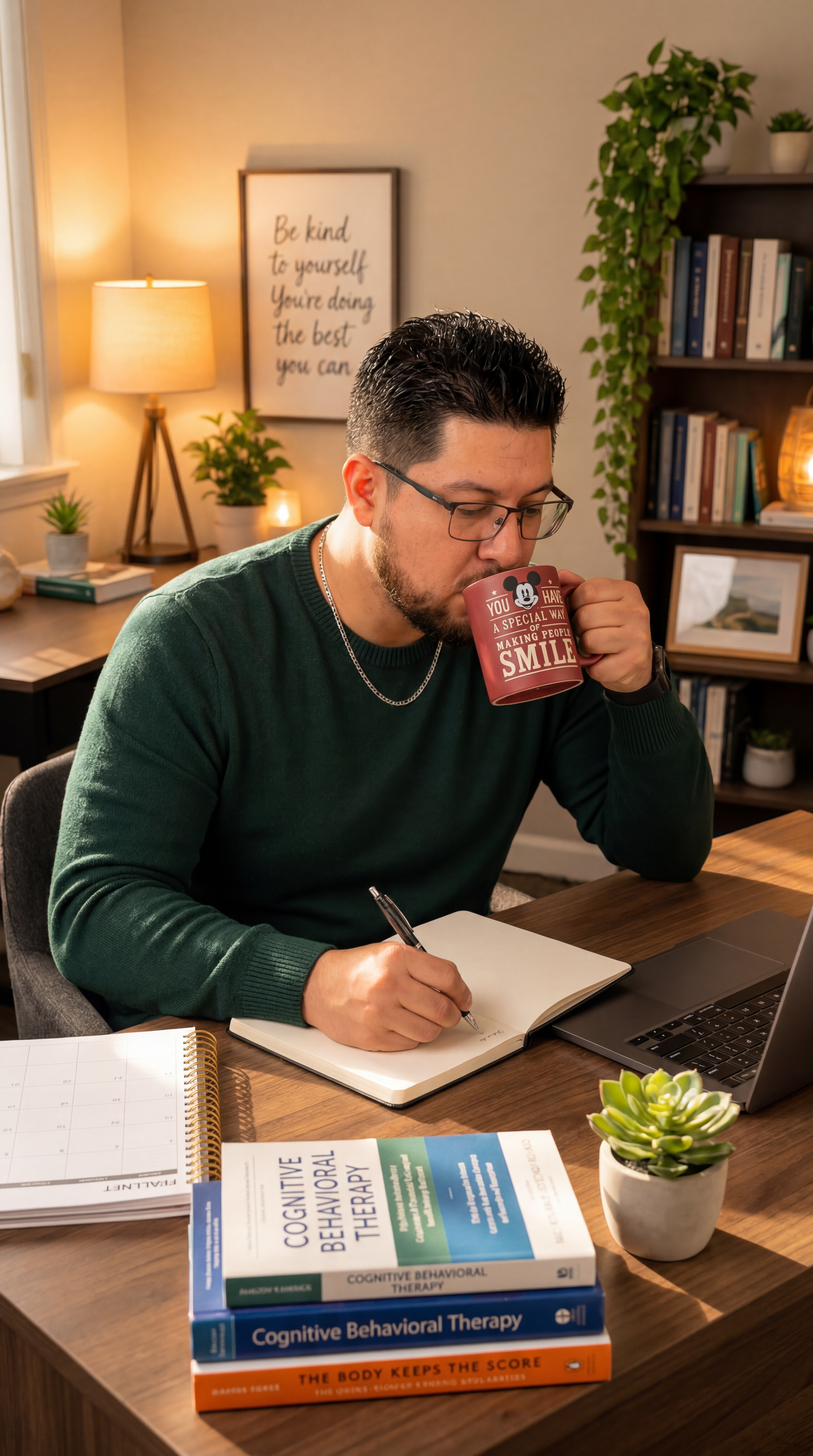
About the Author
Julio Alberto Ibarra is a licensed professional counselor (LPC) with over 10 years of experience supporting clients in Texas. He specializes in working with adolescents and parents navigating anxiety, ADHD, and depression, using evidence-based approaches — including CBT, the Unified Protocol, and the Positive Parenting Program (Triple P) — to help clients manage their symptoms, improve communication at home, support stronger academic performance, and build lasting emotional regulation skills. At Wayfinder Counseling Therapy, Julio provides compassionate, expert care both in-person and online for clients throughout Texas virtually, including paces like Austin, Dallas, and Houston.