Is Online Therapy Effective in 2026?
Is Online Therapy as Effective as In-Person Treatment?
The question of whether online therapy is effective has shifted from a simple yes-or-no answer to a more nuanced reality: it works, and for many people, it works just as well as in-person treatment. What matters most is the fit between the client and the modality, not the modality itself.
Research has demonstrated that virtual therapy produces measurable outcomes for anxiety, depression, ADHD-related challenges, and stress management. The therapeutic alliance, that critical relationship between therapist and client, translates effectively to video sessions when both parties are engaged and the technology supports clear communication.
At Wayfinder Counseling Therapy, we've worked with teens, young adults, and families across Texas who initially questioned whether online therapy could truly help. What we've consistently observed is that the "people before problems" approach works regardless of whether you're sitting across from a therapist in an office or connecting via secure video from your home. The core mechanism of change, being truly heard and understood, doesn't require physical proximity.
The real differentiator isn't the format. It's whether the therapist understands your specific situation and whether you feel safe enough to be honest about what's actually going on. Virtual sessions remove certain barriers: commute time, scheduling inflexibility, and the anxiety some people feel walking into a physical office.
Key TakeawayOnline therapy is clinically effective for most mental health concerns. The therapeutic relationship, not the technology, determines outcomes. Success depends on finding a licensed mental health professional who understands your specific needs and creating an environment where you can be fully present.
Teen Mental Health Support Online: What the Research Shows
Teen mental health support online has expanded dramatically, and for adolescents specifically, virtual counseling addresses a critical access gap. Many teens report feeling more comfortable opening up in a digital environment because it feels less formal and they control their physical space.
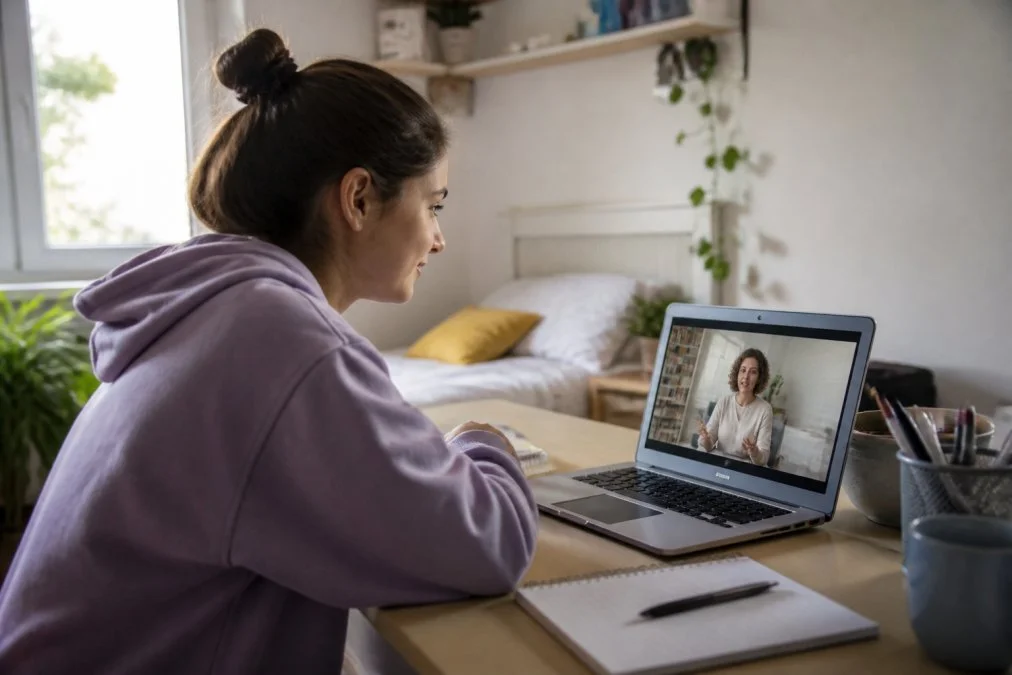
A teen sitting at a desk with a laptop, relaxed and engaged during a video therapy session from Wayfinder Counseling Therapy therapist in Texas, in a comfortable home environment with natural window lighting
For conditions like anxiety and school-related stress, online therapy for teens produces outcomes comparable to in-person treatment. Adolescents dealing with social anxiety, test anxiety, or perfectionism often find that the reduced pressure of a virtual setting helps them engage more authentically in sessions.
The honest answer to parent skepticism: some teens do better with virtual therapy, some prefer in-person, and some benefit from a hybrid approach. What matters is that they're getting professional support from a licensed mental health professional who specializes in adolescent development. When a therapist has specialized training in adolescent mental health and uses evidence-based practices, teens see measurable improvements in anxiety management, emotional regulation, and school performance.
Virtual sessions also create a practical advantage: consistency. A teen who can attend therapy from home is more likely to show up than one who needs a 30-minute drive to an office. Consistency matters more than the setting.
Virtual Therapy vs In-Person Counseling: Key Differences
Understanding the structural differences between virtual therapy and in-person counseling helps you make a decision aligned with your actual needs rather than assumptions about what therapy "should" look like.
In-person counseling offers physical presence, which some people find grounding. A dedicated therapy space signals to your brain that this time is different. The therapist can observe your full body language. For some individuals, particularly those with severe trauma, this tangible environment can feel essential.
Virtual therapy removes logistical friction. You attend from home, eliminating commute time and the social anxiety some people feel entering a therapist's office. You control your environment, which can feel safer. For busy teens and parents, this flexibility is transformative.
The therapeutic process itself is largely identical. Your therapist still uses evidence-based practices like cognitive behavioral therapy or dialectical behavior therapy. The clinical skills, active listening, asking clarifying questions, helping you identify patterns, don't change. What changes is the medium of connection.
One genuine limitation of virtual therapy: crisis intervention. If you're in acute distress or experiencing a mental health emergency, video sessions have boundaries. A competent therapist will have protocols for this, including crisis resources and emergency contacts. For ongoing support, symptom management, and building skills around anxiety, stress, and emotional regulation, the evidence shows that virtual therapy and in-person treatment produce comparable outcomes.
How to Maximize Your Virtual Therapy Experience
Getting real value from online therapy requires intentionality on your part. The therapist brings expertise and training, but you bring the most important element: honest engagement with the process.
Create a dedicated space. Find a quiet room where you can speak openly without interruption. Close the door and put your phone on silent. This physical boundary signals to your brain that therapy time is sacred.
Show up on time and prepared. Log in a few minutes early and have your camera and microphone tested beforehand. Know what you want to talk about, even if it's just "I'm stressed but I'm not sure why."
Be honest about what's not working. If you're not feeling heard or the therapist's approach isn't resonating, say so. A good therapist will adjust. The therapeutic alliance only works if you're willing to be direct about what you need.
Practice what you learn between sessions. Real change happens when you actually use the tools your therapist teaches you in your life. Bring back what you learned and what happened when you tried it.
Manage expectations realistically. Therapy isn't a quick fix. Meaningful change typically takes weeks or months of consistent work. The therapist provides the tools and the space; you do the work.
Telehealth Privacy Standards and HIPAA Compliance
One of the most legitimate concerns about virtual therapy is privacy: Is my information actually secure? Who has access to my sessions?
HIPAA compliance is a federal requirement for all mental health providers in the United States, whether they operate in-person or virtually. This means your therapist must use secure platforms, protect your records, and limit access to your information. However, HIPAA applies to the therapist and their practice, not to other people in your home overhearing a session.
The responsibility for privacy is shared. Your therapist must use a HIPAA-compliant video platform and ensure their office environment is secure. You must ensure your environment is private. If you're a teen and your parent is paying for therapy, therapists maintain confidentiality with teen clients and only involve parents when there's a safety concern.
Before starting virtual therapy, ask your provider directly: What platform do you use? Is it HIPAA-compliant? How is my information stored? What's your policy on confidentiality if I'm a minor? A competent therapist will have clear answers.
Watch Out If you're experiencing a mental health crisis, suicidal thoughts, severe panic, or thoughts of harming yourself or others, a video session is not the appropriate response. Have a plan before crisis hits: know your local emergency number, identify a crisis hotline you can call, and discuss emergency protocols with your therapist during your initial consultation.
Who Benefits Most From Online Therapy?
Virtual therapy isn't universally ideal, but it's genuinely transformative for specific groups of people.
Teens and young adults often benefit significantly. They're digital natives, they value convenience, and they frequently feel more comfortable opening up in a less formal environment.
People with mobility limitations or chronic illness gain access they might not otherwise have. If you're homebound or have physical limitations that make travel difficult, virtual therapy removes a major barrier.
Busy professionals and parents appreciate the time savings and scheduling flexibility. A 30-minute commute each way adds up.
People in rural areas or underserved regions have access to specialized providers they might not find locally. If you need a therapist who specializes in ADHD or anxiety, you're no longer limited to whoever practices nearby.
Individuals with social anxiety sometimes find that the reduced intensity of a video call makes it easier to engage.
Virtual therapy is less ideal for people experiencing severe mental health crises, those without reliable internet access or a private space, and some individuals with certain trauma histories who specifically need the grounding of physical presence. The key is honest self-assessment: What would help you show up consistently? What environment helps you feel safe enough to be vulnerable?
Addressing the Myths About Online Therapy Effectiveness
Several persistent misconceptions about virtual therapy circulate, and they keep people from getting help they need.
Myth: "It's not real therapy if it's not in person." The core of therapy, the therapeutic alliance, the clinical skills, the evidence-based techniques, doesn't depend on physical location. A licensed mental health professional using proven methods is doing real therapy whether you're sitting in an office or on a video call.
Myth: "The therapist can't really understand what's going on without seeing me in person." A skilled therapist gathers information through listening, asking questions, and observing what you share. Video calls convey facial expressions, tone of voice, and emotional responses, the primary sources of clinical information.
Myth: "Online therapy is cheaper because it's less professional." Virtual therapy isn't inherently cheaper. Pricing depends on the individual provider, their credentials, their specialization, and your location. A licensed therapist with experience charges rates based on their practice.
Myth: "My teen won't take it seriously if it's online." Teens often take virtual therapy more seriously than in-person because it feels less formal and more accessible. They're more likely to show up consistently and open up more readily.
Myth: "Online therapy doesn't work for serious conditions like anxiety or ADHD." Virtual therapy has strong clinical evidence for anxiety disorders, ADHD symptom management, depression, and other significant mental health conditions. The therapeutic approach is identical; the delivery method is different.
Virtual therapy has evolved from a temporary convenience during the pandemic into a legitimate, effective treatment modality with strong clinical outcomes. Whether you're a teen navigating school stress, a parent seeking to improve family communication, or a young adult managing anxiety, online therapy can provide real support and measurable change.
The decision between virtual and in-person counseling isn't about which is objectively better, it's about which fits your life, your preferences, and your specific needs. What matters most is that you actually engage with a qualified licensed mental health professional who understands your situation and uses evidence-based practices.
At Wayfinder Counseling Therapy, we specialize in virtual sessions designed specifically for teens, young adults, and families across Texas. Our approach centers on understanding the person before the problem, which means we take time to truly know you before jumping to solutions. Whether you're dealing with anxiety, ADHD, school stress, or family communication challenges, we offer a safe, bilingual space where you can be heard.
Ready to explore whether online therapy is right for you? Book a free 15-minute consultation with Julio Ibarra, LPC, to discuss your specific situation and get clarity on whether virtual therapy is the right fit.
Frequently Asked Questions
How effective is online therapy compared to in-person sessions?
Clinical research shows online therapy produces comparable outcomes to in-person treatment for most conditions, including anxiety, depression, and ADHD. The therapeutic alliance, the relationship between client and therapist, is what drives results, and this can develop effectively through video. Success depends more on finding the right therapist and your commitment to the process than the delivery method itself.
What privacy protections exist for online therapy under HIPAA?
Licensed mental health providers using telehealth must comply with HIPAA regulations, which require encryption of patient data, secure video platforms, and strict confidentiality protocols. Your personal health information and session notes are protected the same way as in-person records. Always verify your provider uses HIPAA-compliant video conferencing and ask about their data security practices before starting.
Is teen mental health support online effective for serious conditions like severe ADHD or anxiety?
Online therapy can be effective for teens with ADHD and anxiety, though severity matters. Therapists use evidence-based approaches like cognitive behavioral therapy to help teens develop coping strategies and emotional regulation skills. For severe cases involving crisis risk or complex needs, your therapist may recommend supplementing virtual sessions with psychiatric evaluation or additional support. The key is working with a provider experienced in treating adolescents.
How do I know if virtual therapy is right for my mental health goals?
Online therapy works well if you prefer convenience, live in a rural area, need flexible scheduling, or struggle with transportation. It's also effective if you're more comfortable opening up from home. However, if you need crisis intervention, have severe psychiatric symptoms, or struggle with digital technology, discuss these factors with a mental health professional to determine the best fit for your situation.
