
How to Help Teens With Anxiety: A Parent's Guide
Learn how to help teens with anxiety using proven coping strategies, communication tips, and guidance on when to seek professional support. Discover more.

Signs of Anxiety in Teenagers: What to Watch For
Recognizing the signs of anxiety in teenagers is the first critical step for parents seeking to provide support. Anxiety in adolescents often manifests differently than in younger children or adults, making it challenging to identify. It's not just about occasional worry; it's a persistent state that can significantly impact a teen's daily life, from school performance to social interactions and overall well-being. Understanding these nuanced indicators is key to knowing how to help teens with anxiety effectively.
Physical Symptoms Parents Often Miss
Many parents overlook the physical manifestations of teen anxiety, often attributing them to typical adolescent growth or other minor ailments. However, anxiety frequently presents with bodily cues that can be quite telling. Teens might complain of unexplained headaches, stomachaches, or general fatigue, especially during stressful periods. They may also experience muscle tension, restlessness, or difficulty sleeping, even when tired. These physical symptoms are not imaginary; they are the body's physiological response to prolonged stress and worry. For example, persistent stomach issues without a clear medical cause can often be linked to underlying anxiety. What most guides miss is that these symptoms are often dismissed, leading to delayed intervention.
Watch OutA common mistake is dismissing a teen's persistent physical complaints as "just trying to get out of school" or hypochondria. Ignoring these real bodily signals can prolong their distress and prevent timely support for their anxiety.
Behavioral and Emotional Red Flags
Beyond physical symptoms, anxiety in teenagers often expresses itself through noticeable shifts in behavior and emotional regulation. Parents might observe increased irritability, sudden outbursts, or a tendency to withdraw from activities they once enjoyed. A teen might become overly sensitive to criticism, struggle with concentration, or exhibit excessive perfectionism. Socially, they may start avoiding friends, declining invitations, or showing heightened self-consciousness. Academically, a decline in grades, procrastination, or an unwillingness to attend school can also signal underlying anxiety. Emotionally, many teens with anxiety struggle with persistent feelings of dread, panic, or overwhelm, which they may not know how to articulate. They might also engage in repetitive behaviors or seek constant reassurance.
How to Talk to Your Teen About Mental Health
Initiating conversations about mental health can feel daunting for both parents and teenagers, yet it is a cornerstone of learning how to help teens with anxiety. The goal isn't to "fix" them immediately but to create a safe space where they feel heard and understood without judgment. This requires patience, empathy, and a willingness to listen more than you speak. For many teens, simply knowing they have an ally in their parent can be a significant source of comfort and
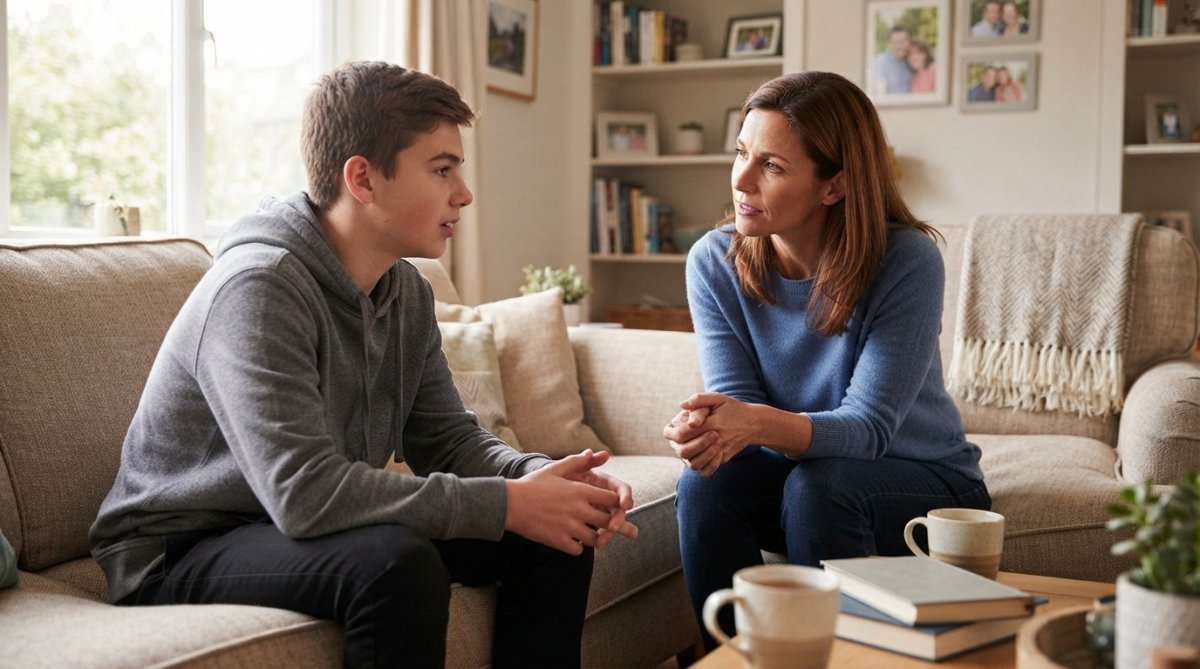
Step-by-step visual guide for parent and teenager and sitting concepts for how to help teens with anxiety
Active Listening Scripts That Actually Work
Truly hearing your teen means practicing active listening, a skill that goes beyond just waiting for your turn to talk. It involves giving them your full attention, reflecting on what you hear, and validating their feelings. A common mistake is jumping straight to solutions or minimizing their feelings. Instead, try these scripts:
To open the conversation: "I've noticed you seem a bit [quiet/stressed/different] lately. I'm here if you ever want to talk about anything, no pressure."
To encourage sharing: "It sounds like you're going through a lot right now. Can you tell me more about what's on your mind?"
To validate their feelings: "That sounds incredibly frustrating/scary/overwhelming. It makes sense that you feel that way."
To reflect without judgment: "So, if I'm understanding correctly, you're feeling [emotion] because [situation]?"
To show support: "I'm sorry you're dealing with this. We'll figure it out together."
What to Say (and What to Avoid)
When your teen opens up, your response matters immensely. Focus on empathy and support. What most guides miss is the subtle power of your tone and non-verbal cues. Maintain open body language, make eye contact, and avoid distractions.
What to Say:
"I love you, and I'm here for you no matter what."
"Your feelings are valid, and it's okay to feel them."
"We can explore options together to help you feel better."
"It takes a lot of courage to talk about this, and I appreciate you trusting me."
What to Avoid:
"You're overreacting." or "It's not a big deal." (Dismisses their feelings)
"Just stop worrying so much." (Invalidates their experience)
"You need to get over it." (Implies their anxiety is a choice)
"Why can't you be more like [sibling/friend]?" (Creates comparison and shame)
"This is your fault." (Blames them for their struggles)
Pro TipIn practice, this means creating a consistent "check-in" time, even if it's just a few minutes during a car ride or dinner. Regular, low-pressure opportunities for conversation can make it easier for teens to share when they need to.
Teen Anxiety Coping Strategies You Can Practice Together
Helping teens develop effective teen anxiety coping strategies is a continuous process that often works best when parents participate. These strategies aren't quick fixes but rather tools that, with consistent practice, can help manage anxious feelings and build resilience. The real difference between an approach that works and one that doesn't often comes down to integrating these techniques into daily life.

Mindfulness and Relaxation Techniques
Mindfulness and relaxation techniques teach teens to be present and aware, reducing the grip of anxious thoughts. These are skills that improve with practice.
Deep Breathing Exercises: Simple techniques like 4-7-8 breathing (inhale for 4, hold for 7, exhale for 8) can quickly calm the nervous system (peer-reviewed research). Practice together for a few minutes each day.
Guided Meditation: Many free apps and online resources offer short guided meditations specifically for teens. Try a 5-10 minute session before bed or during a stressful moment.
Progressive Muscle Relaxation: This involves tensing and then relaxing different muscle groups throughout the body. It helps teens recognize and release physical tension associated with anxiety.
Grounding Techniques: When overwhelmed, grounding helps bring focus back to the present. Ask your teen to name 5 things they can see, 4 things they can feel, 3 things they can hear, 2 things they can smell, and 1 thing they can taste.
Technique
How It Helps
Best Practice
Deep Breathing
Calms the nervous system, reduces heart rate
Daily 5-minute sessions, during stressful moments
Guided Meditation
Enhances presence, reduces intrusive thoughts
Before bed, during quiet time
Progressive Muscle Relaxation
Releases physical tension, increases body awareness
When feeling tense, before sleep
Grounding Techniques
Redirects focus from anxious thoughts to present
During panic or overwhelming moments
Physical Activity, Sleep Hygiene, and Nutrition
A holistic approach to managing anxiety includes attention to physical well-being. These aspects are often overlooked but play a significant role in emotional regulation.
Physical Activity: Regular exercise is a powerful stress reliever. Encourage activities your teen enjoys, whether it's team sports, hiking, dancing, or simply walking the dog. The goal is consistent movement, not intense training. Physical activity releases endorphins, which have mood-boosting effects (the NIH).
Sleep Hygiene: Lack of sleep exacerbates anxiety. Establish a consistent sleep schedule, ensure their bedroom is dark and cool, and limit screen time before bed. Avoid caffeine intake, especially in the afternoon and evening.
Nutrition: A balanced diet supports overall mental health. Encourage nutrient-rich foods and limit processed snacks, excessive sugar, and highly caffeinated beverages. A stable blood sugar level can help prevent mood swings and irritability.
Key TakeawayConsistent engagement in these strategies, especially when practiced with a parent, reinforces their effectiveness and helps teens build a strong toolkit for managing anxiety.
Digital Wellness and Social Media Boundaries
The digital world presents unique challenges for adolescent mental health, making digital wellness and social media boundaries crucial for parents learning how to help teens with anxiety. Constant connection, the pressure of online comparison, and exposure to cyberbullying can significantly fuel anxiety.
It's not about banning technology entirely, but about fostering a healthy relationship with it. Start by having open conversations about their online experiences, what they see, and how it makes them feel. Encourage them to critically evaluate content and understand that what they see online is often a curated highlight reel, not reality.
Establishing clear boundaries for screen time, especially around bedtime, is essential for improving sleep hygiene. Consider a "digital curfew" where all devices are put away an hour before sleep. Work with your teen to create a family media plan that includes designated screen-free times and zones, like during meals or family outings. Teach them about privacy settings and the importance of being mindful of what they share online. Encourage them to unfollow accounts that make them feel inadequate or anxious. This proactive approach helps teens build resilience against online stressors and promotes better emotional regulation.
Parental Self-Regulation and Sibling Dynamics
Parental self-regulation is an often-underestimated factor in supporting an anxious teen. Children, especially adolescents, are highly attuned to their parents' emotional states. If a parent is constantly stressed, anxious, or overwhelmed, it can inadvertently heighten a teen's own anxiety. Therefore, parents learning how to help teens with anxiety must also prioritize their own mental well-being. This doesn't mean hiding your emotions, but rather modeling healthy coping mechanisms.
Practice your own stress management techniques, whether it's mindfulness, exercise, or seeking support for yourself. Showing your teen that you also prioritize your mental health can be a powerful example. This is where Wayfinder Counseling Therapy can help parents in Texas, offering guidance to improve communication and emotional regulation within families. Our approach focuses on understanding the individual before the problem, fostering a human-centered environment where both parents and teens can gain clarity.
Regarding sibling dynamics, an anxious teen's struggles can sometimes impact their siblings. Younger siblings might feel overlooked, while older siblings might feel burdened or confused. Address these dynamics by:
Educating siblings: Help them understand what anxiety is and how it affects their brother or sister, fostering empathy rather than resentment.
Ensuring individual attention: Make sure each child receives dedicated one-on-one time, preventing feelings of neglect or favoritism.
Setting clear boundaries: Teach siblings how to respectfully engage with their anxious brother or sister, and when to give them space.
Modeling healthy communication: Show how to express feelings constructively and resolve conflicts calmly.
When to See a Therapist for Teen Anxiety
Knowing when to see a therapist for teen anxiety is a crucial decision for many families. While parental support and coping strategies are invaluable, there are times when professional intervention becomes necessary. This is not a sign of failure but a proactive step towards ensuring your teen receives the specialized care they need. If anxiety symptoms are persistent, severe, or significantly interfering with daily life, such as school, friendships, or family relationships, it's likely time to seek expert help. The thing nobody tells you about this decision is that waiting too long can make symptoms more entrenched and harder to manage.
What Professional Support Looks Like: CBT and Beyond
Professional support for teen anxiety typically involves evidence-based therapeutic techniques. One of the most effective approaches is Cognitive Behavioral Therapy (CBT), which helps teens identify and challenge negative thought patterns and develop healthier coping mechanisms (peer-reviewed research).
Other therapeutic techniques might include:
Dialectical Behavior Therapy (DBT): Focuses on emotional regulation, distress tolerance, interpersonal effectiveness, and mindfulness.
Exposure and Response Prevention (ERP): Often used for specific phobias or obsessive-compulsive disorder (OCD), gradually exposing teens to feared situations to reduce anxiety responses.
Family Therapy: Involves the entire family in the therapeutic process to improve communication and support systems.
At Wayfinder Counseling Therapy, our specialized focus on teens and young adults in Texas, led by Julio Ibarra, LPC, provides a safe, bilingual space for navigating anxiety and other challenges. We use a personalized, human-centered approach to help clients gain emotional clarity and foster improved communication within families. Our virtual therapy sessions offer practical, professional support tailored to individual needs.
School-Specific Accommodations Worth Requesting
Anxiety can severely impact a teen's academic performance and ability to thrive in a school environment. Fortunately, schools can often provide specific accommodations to support anxious students. These accommodations are designed to reduce stressors and create a more conducive learning environment.
Consider requesting:
Extended time on assignments or tests: Reduces pressure and allows for better focus.
Flexible deadlines: Provides leeway during periods of heightened anxiety.
Designated "safe space" or quiet area: A place where the teen can decompress if feeling overwhelmed.
Preferred seating: Near the front or away from distractions can reduce social anxiety.
Breaks during class or tests: Allows for short mindfulness or grounding exercises.
Modified presentation requirements: Instead of oral presentations, perhaps a written report or presenting to a smaller group.
Access to a school counselor: Regular check-ins can provide ongoing support and a consistent point of contact.
Discuss these options with your teen's school counselor or a relevant administrator. A collaborative approach between parents, therapists, and school staff can significantly improve a teen's experience and academic success.
Frequently Asked Questions
What is the 3-3-3 rule for anxiety in teens?
The 3-3-3 rule is a simple grounding technique for managing anxiety in the moment. Ask your teen to name 3 things they can see, 3 sounds they can hear, and then move 3 parts of their body. This pulls attention away from anxious thoughts and back to the present environment. It works well for panic attacks or moments of intense stress and is easy to practice at home before a teen needs it in a high-pressure situation like school or a social setting.
How can I tell the difference between normal teen stress and an anxiety disorder?
Normal stress is usually tied to a specific event — an exam, a social conflict — and fades once it passes. Anxiety disorders are more persistent: the worry is frequent, feels uncontrollable, and interferes with daily life, sleep, school attendance, or friendships. Physical symptoms like headaches, stomachaches, or a racing heart that have no medical explanation are also common signs. If your teen's anxiety has lasted several weeks and is affecting their functioning, a licensed professional can provide a proper clinical assessment.
What are effective communication strategies when a teen is feeling anxious?
Start by validating their feelings before offering solutions. Phrases like 'That sounds really hard' or 'I hear you' signal empathy rather than dismissal. Avoid minimizing their experience with comments like 'just relax' or 'it's not a big deal.' Ask open-ended questions such as 'What would help you right now?' Active listening — making eye contact, putting your phone down, and reflecting back what you heard — builds the trust your teen needs to keep opening up over time.
When should parents seek professional mental health support for their teen?
Seek professional support when anxiety is interfering with your teen's daily life: refusing school, withdrawing from friends, struggling to sleep, or experiencing panic attacks. Early intervention produces better outcomes than waiting for symptoms to worsen. A licensed professional counselor can provide a clinical diagnosis, rule out other conditions like ADHD, and recommend evidence-based approaches such as cognitive behavioral therapy. If your teen expresses hopelessness or mentions self-harm, treat that as an urgent situation and contact a mental health professional or crisis line immediately.

3 Tools That Actually Help ADHD Teens Get Back Into a School Routine

By late August, a lot of ADHD teens have lost the routine they had back in May. Telling them to "just remember" doesn't fix that. Three tools actually help, and they all work the same way: they do the remembering for your teen instead of asking their brain to do it alone. A visual planner that shows the day like a picture instead of a to-do list. A homework timer that takes the phone out of the decision. And a "launch pad," one spot by the door where backpacks and shoes always live. None of these ask your teen to try harder. That's exactly why they work.
Why the First Few Weeks Are So Hard for ADHD Teens
About 7 million kids in the U.S., ages 3 to 17, have an ADHD diagnosis right now. That's about 11.7% of all kids that age, according to the CDC's most recent numbers. And about 6 out of 10 of them have symptoms that are moderate or severe, not mild. So if your teen is struggling, they are far from the only one. Chances are good there are two or three kids just like them in every classroom.
Here's the part most parents don't expect. Your teen didn't actually forget how to do homework or clean their room over the summer. Think of it like training wheels on a bike. The skill was never really "inside" your teen on its own. It was held up by things around them, like a set wake-up time, someone reminding them at the same moment every day, a teacher checking their planner. Take those props away for a whole summer, and the skill looks like it vanished. It didn't. The support underneath it did.
This comes up constantly with families this time of year. Parents describe a kid who "used to be able to do this" and now can't sit through homework without wandering to the kitchen five times. Or a room that stayed clean all spring and is a disaster again by week two. That's not laziness, and it's not your teen going backward. It's a missing-support problem. And missing supports need to be rebuilt, not just talked about.
Tool 1: A Visual Planner That Shows the Day Instead of Just Listing It
Most families try a paper planner or a wall calendar first. It usually stops working within two weeks. Not because your teen doesn't care, but because a paper planner only helps if someone remembers to open it. And "remembering to check the thing that reminds you" is exactly the part that's broken.
Tiimo is an app built for ADHD brains. Instead of a plain list, it shows the day as a color-coded timeline, almost like a picture of the whole day laid out in front of you. It has a timer that makes time visible, so "20 minutes" isn't just a number, it's a bar shrinking on the screen. It also puts today's schedule right on the home screen as a widget, so your teen sees the plan without even opening the app. There's also a tool inside it that breaks a big vague task, like "study for the bio test," into small clear steps. That matters more than it sounds like it should. A lot of ADHD avoidance isn't about the task being hard. It's about not knowing where to even start, so the brain picks up the phone instead.
Set it up together the first time you use it. If your teen sets it up completely alone, it can feel like one more rule from you instead of their own tool, and that's usually where teens quit using it.
Tool 2: A Timer That Takes the Phone Decision Away
Homework turning into phone time isn't a discipline problem. Picture trying to eat a plate of vegetables with a bowl of candy sitting right next to it. That's what a phone next to homework is like for an ADHD brain. The candy wins almost every time, not because of weak willpower, but because it's simply more interesting and it's right there.
Forest is an app that grows a small tree on the screen for as long as your teen stays off their phone. Leave the app to check something else, and the tree dies. It sounds too simple to work, but that simple visual is exactly why it does work. It doesn't ask your teen to have more willpower. It just makes leaving the app cost something you can see right away, instead of a vague bad grade three weeks from now. ADHD brains respond much better to "right now" consequences than "someday" ones.
One honest note: this only works if it feels like your teen's tool, not your rule. The second it becomes "the app Mom makes me use," teens find a way around it fast. Let them choose how long each session is, and let the streak belong to them.
Tool 3: The Launch Pad, a Simple Fix for Things That Keep Going "Missing"
Not every fix needs to be an app. This one is just a shelf, some hooks, or a bin by the door. Occupational therapists have used it for years, and it lines up exactly with what a lot of parents describe: backpacks, shoes, permission slips, and gym clothes that were fine all spring and are suddenly missing again every morning.
Think of it like a dock for a boat. You always tie the boat up in the same spot, so you never have to search the lake for it. A launch pad works the same way. Pick one spot by the door. Backpack packed and set there the night before. Shoes lined up underneath. A small tray for anything that needs a signature. This turns "remember where I put my shoes" into "walk to the one spot where my shoes always are." The second one doesn't need memory at all, and memory is exactly what runs low at 7am with a bus six minutes away.
Here's how the three tools split up the actual problem:
Tiimo (visual planner)
Fixes: not knowing the plan for today, or how to start a big task
Setup time: about 15 minutes, done together the first time
Forest (focus timer)
Fixes: homework time turning into phone time
Setup time: under 2 minutes, teen picks the session length
Launch pad (a spot by the door)
Fixes: losing backpacks, shoes, and papers every morning
Setup time: about 30 minutes, one time only
How to Introduce These Without Starting a Fight
Try one tool at a time, not all three in the same week. A teen who's already behind on routine will feel three new systems as three new ways to fail, not three things helping them.
Let your teen pick which one to try first. Kids stick with a tool much longer when they chose it, instead of being handed a rule. If they pick the launch pad because "the apps are annoying," that still counts as a win.
Give any new tool two full weeks before deciding it isn't working. The first few days always look messy. That's not failure. That's just what learning something new looks like, ADHD or not.
Talk about the system, not your teen. Try, "The launch pad isn't catching your gym clothes yet, let's move it," instead of, "you keep forgetting your gym clothes." The first one is a problem you're solving together. The second one feels like a judgment, and most ADHD teens have already heard plenty of those.
Common Questions From Parents This Time of Year
Why does my teen forget things they clearly already knew how to do? They almost never actually forgot it. What's missing is the support that made the skill work, like a set time, a reminder, someone checking in. Once that support disappears over summer, the skill looks gone too, even though it isn't.
How long does it really take to get back into a school routine? Most families start seeing real change somewhere between three and six weeks, not in the first week. Expect the first two weeks to be rough no matter what tools you use. That's normal, not a sign something is broken.
Should we take away privileges when the routine falls apart? Punishment targets willpower, and willpower was never really the problem here. It works better to treat a bad morning as information, a sign the system needs a small change, instead of something to punish.
Will these tools work for a teen who hates being "managed"? Usually yes, as long as the tool feels like theirs and not a rule from you. A 15-year-old might ignore a chore chart their mom made but keep up a Tiimo streak they built themselves. Same idea, different feeling of ownership, and that difference changes everything.
When should we get outside help instead of just using tools like these? If mornings and homework are still just as hard after six to eight weeks of really trying tools like these, or if it's causing a lot of fighting at home or hurting your teen's confidence, that's a good time to talk to a therapist who works specifically with ADHD teens, not just general parenting advice.
This article is meant to inform, not replace individual therapy. If your family's situation feels bigger than what a few tools can fix, that's worth a real conversation with a licensed professional.
Julio Ibarra, LPC, specializing in adolescent ADHD, offering virtual therapy across Texas Published August 2026
About the Author
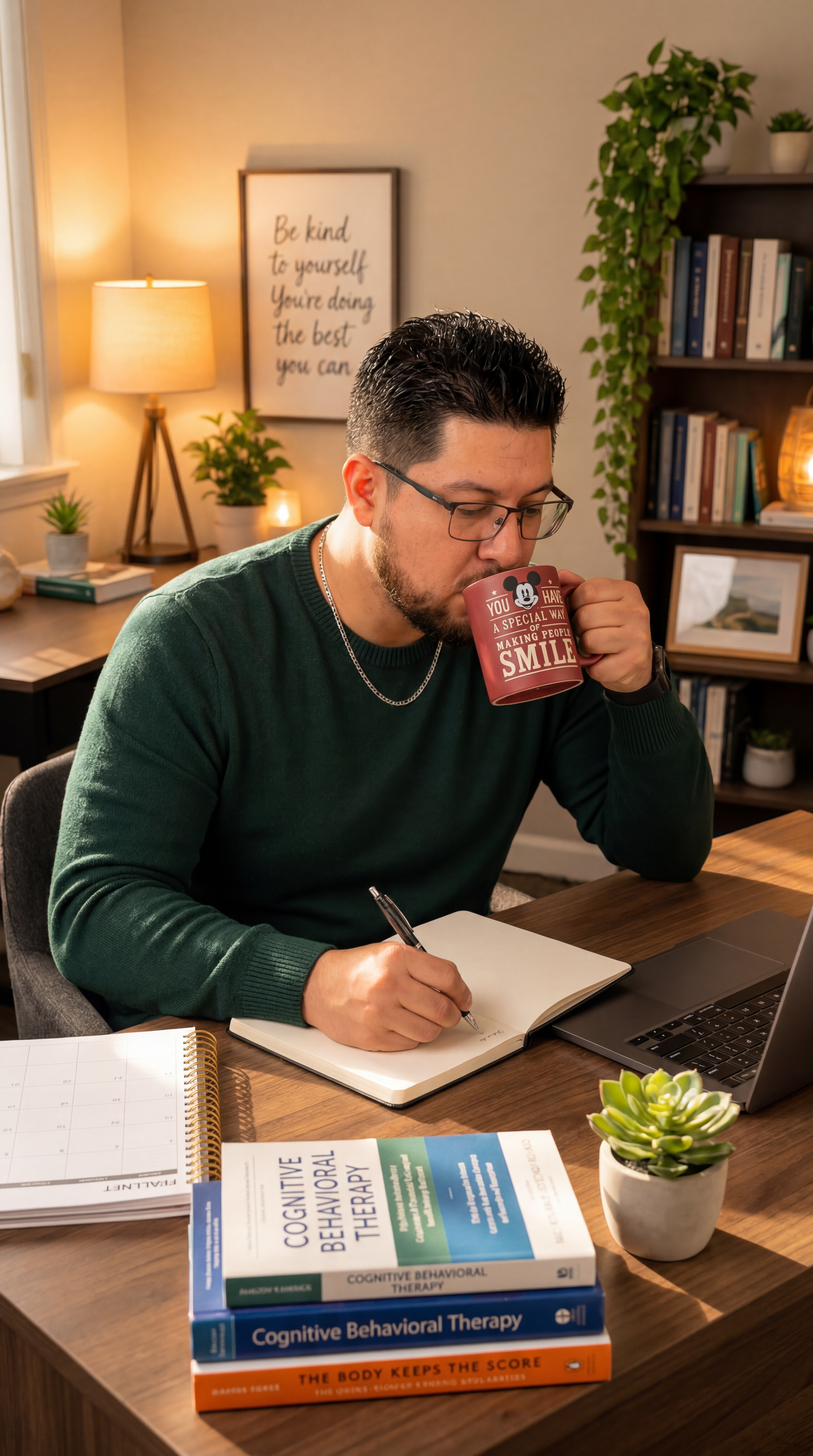
Julio Alberto Ibarra is a licensed professional counselor (LPC) with over 10 years of experience supporting clients in Texas. He specializes in working with adolescents and parents navigating anxiety, ADHD, and depression, using evidence-based approaches — including CBT, the Unified Protocol, and the Positive Parenting Program (Triple P) — to help clients manage their symptoms, improve communication at home, support stronger academic performance, and build lasting emotional regulation skills. At Wayfinder Counseling Therapy, Julio provides compassionate, expert care both in-person and online for clients throughout Texas virtually, including paces like Austin, Dallas, and Houston.