Virtual Counseling for School Stress: A Parent's Guide
When your teen starts dreading Mondays, complaining of headaches before exams, or snapping at everyone after school, it is easy to chalk it up to a phase. But persistent school stress often signals something deeper, and virtual counseling for school stress has become a practical first step for many families. At Wayfinder Counseling Therapy, we help parents across Texas recognize when everyday pressure turns into academic burnout and connect their teens with support that fits their lives.
Virtual counseling is a flexible, effective way for students to meet with a licensed mental health professional from home, removing commute time and the stigma of walking into an office. This guide covers the warning signs, how online sessions work, and practical steps to support your teen.
Signs of Academic Burnout in Teens
Academic burnout builds slowly, and the warning signs often look like typical teenage behavior at first. The clearest signal is a shift in attitude: a student who once cared about grades stops trying, or one who loved school now finds reasons to avoid it.
Common signs include a drop in academic performance, frequent physical symptoms like stomachaches or fatigue, withdrawing from friends or family, increased irritability, changes in sleep, or a loss of interest in hobbies. Test anxiety is another red flag, especially when it causes your teen to freeze up or panic despite being prepared.
A common mistake is waiting to see if the behavior "fixes itself." If these signs persist for more than two weeks, it is worth exploring professional support. Early intervention prevents a rough semester from turning into a pattern of avoidance that follows your teen into adulthood.
What Virtual Counseling for School Stress Looks Like
Virtual counseling for school stress connects your teen with a licensed therapist through secure video sessions, typically lasting 45 to 50 minutes. The format mirrors traditional talk therapy, but the home setting often helps teens open up faster.
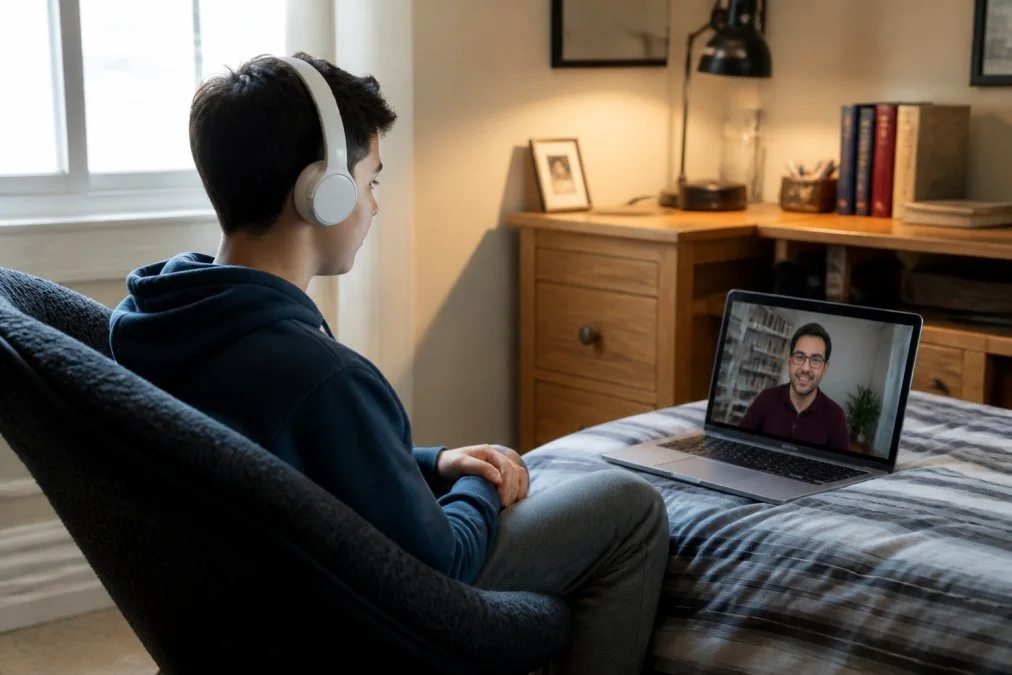
Sessions focus on building coping mechanisms for anxiety, improving time management, and addressing the root causes of stress, whether that is social pressure, academic expectations, or family dynamics. The therapist works with your teen to identify unhelpful thought patterns and replace them with practical strategies for use between sessions.
The First Sessions: What to Expect
The first session is primarily about building rapport. Your teen will talk about their daily routine, what triggers their stress, and what they hope to change. The therapist asks questions to understand their world, not to diagnose them on day one. Parents may share observations, though the therapist will spend most of the time connecting directly with your teen.
By the third or fourth session, a clearer picture emerges: your teen may start using new language to describe their feelings, or share a technique they tried that worked. That is the sign the therapeutic alliance is forming.
How Virtual Counseling Differs from In-Person Therapy
The core work of therapy, building rapport, identifying patterns, and developing coping skills, is the same whether it happens in an office or over video. The differences are practical, and for many teens, they are advantages. But the transition is not always seamless; acknowledging the 'digital divide' and the discomfort some students feel with screen-based therapy is the first step to making it work.
The Digital Divide and Hesitancy
For a student who has only known in-person therapy, the shift to a screen can feel impersonal or awkward. They might worry about being overheard, feel self-conscious seeing their own face on camera, or miss the subtle non-verbal cues of a shared physical space. A common pattern is for teens to report that the first virtual session feels 'weird,' but that this feeling fades by the second or third session.
A good therapist will address this head-on. They might start a session by asking, 'What is different for you about talking this way?' or 'Is there anything about your space that makes you feel less comfortable?' This normalizes the experience and turns the technology into a tool rather than a barrier.
The 'Therapy Space' Problem
In-person therapy creates a clear boundary between 'therapy space' and home life. In virtual counseling, your teen sits in the same chair where they play video games or do homework. Some teens find this makes it easier to relax; others need help transitioning out of 'school mode' before a session.
To bridge this gap, a therapist might coach your teen to create a simple pre-session ritual, such as:
Taking a five-minute walk around the block before logging on.
Changing out of their school clothes into something comfortable.
Having a glass of water and a notebook ready before the session starts.
Spending one minute doing a grounding exercise, like naming five things they can see.
This ritual signals to the brain that a different kind of conversation is about to happen, which helps the student engage more fully.
Privacy in a Shared Home
The biggest practical difference is privacy. A reputable provider uses HIPAA-compliant platforms, meaning your teen's sessions are protected the same way they would be in a clinic. Confidentiality rules still apply: what your teen shares in session stays between them and the therapist, except in cases of safety concerns.
The technical compliance is only half the equation; the other half is the physical environment. Before the first session, have a direct conversation with your teen about where they feel most comfortable. A bedroom with a locked door is ideal for many, but not all teens want their therapist to see their personal space. A quiet corner of a living room can work if the rest of the family agrees to stay out of the room for the full session.
Watch Out If your teen is worried about a sibling or parent overhearing, do not dismiss the concern. Offer to test the audio from outside the room to confirm the conversation is not audible. This simple check builds trust and helps your teen feel safe speaking freely.
When Virtual Is Not the Right Fit
Virtual counseling is not a universal replacement for in-person care. If your teen is experiencing a severe crisis, showing signs of self-harm, or struggling with a condition that requires intensive, in-person intervention, a higher level of care is necessary. Virtual counseling works best for managing stress, anxiety, and academic burnout, not for emergencies. If you are unsure, ask the therapist directly during the initial consultation whether they believe virtual sessions are clinically appropriate for your teen's specific situation.
How to Help Teens with Anxiety at Home
Professional support works best when reinforced at home. Many parents ask us how to help teens with anxiety between sessions, and the answer starts with changing how you respond in the moment.
When your teen is mid-panic or spiraling, do not try to reason them out of it. Instead, validate the feeling first: "That sounds really overwhelming." Once they have calmed down, which often takes a few minutes of deep breathing, you can
Practical techniques that work well at home include:
Teaching your teen to name their emotion ("I am feeling anxious about the history test") to reduce its power
Helping them break overwhelming tasks into small, 15-minute chunks
Modeling calm behavior when they are stressed, since anxiety is contagious in both directions
Creating a predictable evening routine that protects sleep, since exhaustion amplifies anxiety
Pro TipThe most powerful phrase you can use with an anxious teen is "Tell me more about that." It keeps the conversation open without rushing to fix the problem, which builds their confidence in handling it themselves.
The goal is not to eliminate stress, which is impossible, but to build resiliency. Teens who learn to manage moderate stress now carry that skill into college and the workplace.
Setting Up for Success: Tech and Privacy
A successful virtual session depends on three things: a stable connection, a private space, and working audio. You do not need fancy equipment, a laptop or tablet with a camera, a decent internet connection, and a quiet room are sufficient. Here is how to troubleshoot the most common issues before they eat into session time.
Building a Distraction-Free 'Therapy Space'
The physical environment matters more than the technology. The goal is to create a space that feels both private and neutral. A bedroom with the door closed works for most families, but a living room corner can work too if the rest of the family stays quiet.
Before the first session, walk through the space with your teen and check for these common distractions:
Visual clutter: A messy background can be distracting and make your teen feel self-conscious. A blank wall or a tidy bookshelf works best.
Phone notifications: Put the phone in another room or turn on 'Do Not Disturb' mode. A buzzing phone derails focus.
Pets: A dog barking or a cat jumping on the keyboard is a guaranteed interruption. Plan for pets to be in another room.
Foot traffic: If the space is near a hallway or kitchen, post a simple sign on the door that says 'Session in Progress.' This signals to the rest of the household that the space is off-limits.
The Five-Minute Tech Test
Before the first session, test the video platform together. A quick five-minute test run prevents the awkward 'can you hear me now' delay that eats into session time:
Camera angle: Place the laptop on a stack of books so the camera is at eye level. A camera pointing up at the chin is unflattering and distracting.
Lighting: Make sure the light source is in front of your teen, not behind them. Backlighting turns the screen into a dark silhouette.
Audio: Test the built-in microphone. If there is an echo, switch to a pair of wired earbuds with a mic. Bluetooth headphones can introduce latency.
Internet stability: Run a quick speed test. A download speed of at least 10 Mbps is generally sufficient for a stable video call. If the connection is weak, close other browser tabs and pause any large downloads.
Platform familiarity: Log in to the session link a few minutes early to confirm the platform loads correctly and that your teen knows how to mute and unmute themselves.
Troubleshooting Common Issues
Even with a solid test, problems can arise. Here is how to handle the most common ones:
Video freezing or lagging: Ask your teen to turn off their camera temporarily and continue with audio only. This often stabilizes the connection.
Audio echo: This is usually caused by both the computer speakers and the microphone picking up sound. Using headphones eliminates the echo almost entirely.
Background noise: If you hear traffic or household sounds, the therapist may suggest muting the microphone when the teen is not speaking. This is a standard practice in virtual sessions.
Pro TipIf your teen is nervous about the technology, do a practice call with a friend or family member first. The goal is to make the video platform feel as normal as a text message by the time the first real session starts.
Watch OutDo not hold virtual counseling sessions in a car or a public space like a coffee shop. Background noise and the risk of others overhearing undermine both the privacy and the quality of the session. Your teen needs to feel safe speaking freely.
Navigating Insurance and Sliding Scale Fees
One of the biggest barriers to starting virtual counseling is figuring out how to pay for it. Many parents assume their insurance will not cover online therapy, but the process is simpler than you might think.
Start by calling the number on the back of your insurance card and asking three specific questions:
'Does my plan cover telehealth or virtual counseling sessions?'
'Is there a difference in my copay for telehealth versus in-person visits?'
'Do I need a referral from a primary care physician before the first session?'
Many major insurance plans now cover telehealth at the same rate as in-person visits, but this varies by state and plan. If your insurance does not cover virtual counseling, or if you do not have insurance, ask the provider about pricing. Wayfinder Counseling Therapy operates on a private pay model.
How to Talk to Your Teen About Therapy
Bringing up therapy with a resistant teen is one of the hardest conversations a parent can start. Avoid framing therapy as a punishment or a sign that something is "wrong" with them.
Start with curiosity, not conclusions. "I have noticed you seem more stressed lately. How are you feeling about school?" gives your teen room to respond without feeling attacked. If they open up, listen without interrupting. If they shut down, do not push; simply say you are there when they want to talk.
When you introduce the idea of counseling, focus on what is in it for them. Teens respond to the promise of feeling better, not to lectures about their grades. Framing it as "a coach for your brain" or "someone neutral to talk to who is not a parent or teacher" often lands better than calling it therapy.
Acknowledge their objections honestly. If your teen says "I tried therapy and it did not work," validate that experience. You can explain that finding the right therapist makes a difference, and that this is a different person with a different approach. For teens who are bilingual or more comfortable in one language, ask about that preference upfront. At Wayfinder Counseling Therapy, our services are available in both English and Spanish, and matching your teen with a therapist they connect with is the single biggest predictor of success.
Conclusion: Finding the Right Fit
School stress does not have to define your teen's experience. Virtual counseling offers a practical, private way to help them build the skills they need to manage anxiety, improve communication with your family, and find their footing again. The right therapist makes all the difference.
If you are watching your teen struggle and feeling unsure where to turn, start with a conversation. At Wayfinder Counseling Therapy, we offer a free 15-minute consultation to help you determine if our approach fits your family's needs. Our virtual sessions are accessible throughout Texas, and our bilingual, human-centered approach is designed for teens, young adults, and parents navigating anxiety, ADHD, and school stress. Book your consultation and take the first step toward helping your teen feel like themselves again.
Frequently Asked Questions
What are the signs that a teen needs counseling for school stress?
Watch for changes in sleep, appetite, or grades. If your teen seems constantly irritable, withdraws from friends and family, or complains of physical symptoms like headaches or stomachaches before school, it may be more than just a bad week. A sudden drop in academic performance or refusing to go to school are clearer indicators. If these signs of academic burnout in teens last more than two weeks, a consultation with a licensed mental health professional can help you understand what is driving the behavior.
Does virtual counseling for school stress comply with HIPAA privacy standards?
Yes. Licensed therapists in the U.S. are required to use telehealth platforms that are HIPAA-compliant. This means the video software includes encryption and secure data handling to protect your privacy. Before starting, you can ask your counselor which platform they use and how they manage confidential records. Your teen also has the right to a private space during sessions, which helps build trust and openness in the virtual environment.
How does virtual counseling differ from in-person therapy for students?
The main difference is the setting. Virtual counseling removes travel time, which makes it easier to fit sessions into a busy school and activity schedule. Many teens feel more at ease talking from their own room, which can speed up building a therapeutic alliance. The counselor uses evidence-based techniques to address test anxiety and stress management. The effectiveness depends more on the counselor-client relationship than on the delivery method.
How can parents prepare their teen for their first virtual therapy session?
Start by picking a quiet, private spot with a reliable internet connection and a charged device. Encourage your teen to use headphones to keep the conversation confidential. Let them know the first session is about getting to know the counselor, so there is no pressure to have all the answers. Reassure them that what they say is confidential unless they are in immediate danger. This helps them feel safer and more willing to participate.
